Content Libraries
Part of Buyer-facing sales materials
Creating an implementation overview for a buyer
Explain implementation work, responsibilities, dependencies and acceptance without overstating an indicative plan.
An implementation overview should tell a buyer what work is expected, who is likely to do it, what must be confirmed and how readiness for the agreed scope would be assessed. It is a planning document until the buyer's environment, dependencies and commitments have been assessed.
State the proposed starting point
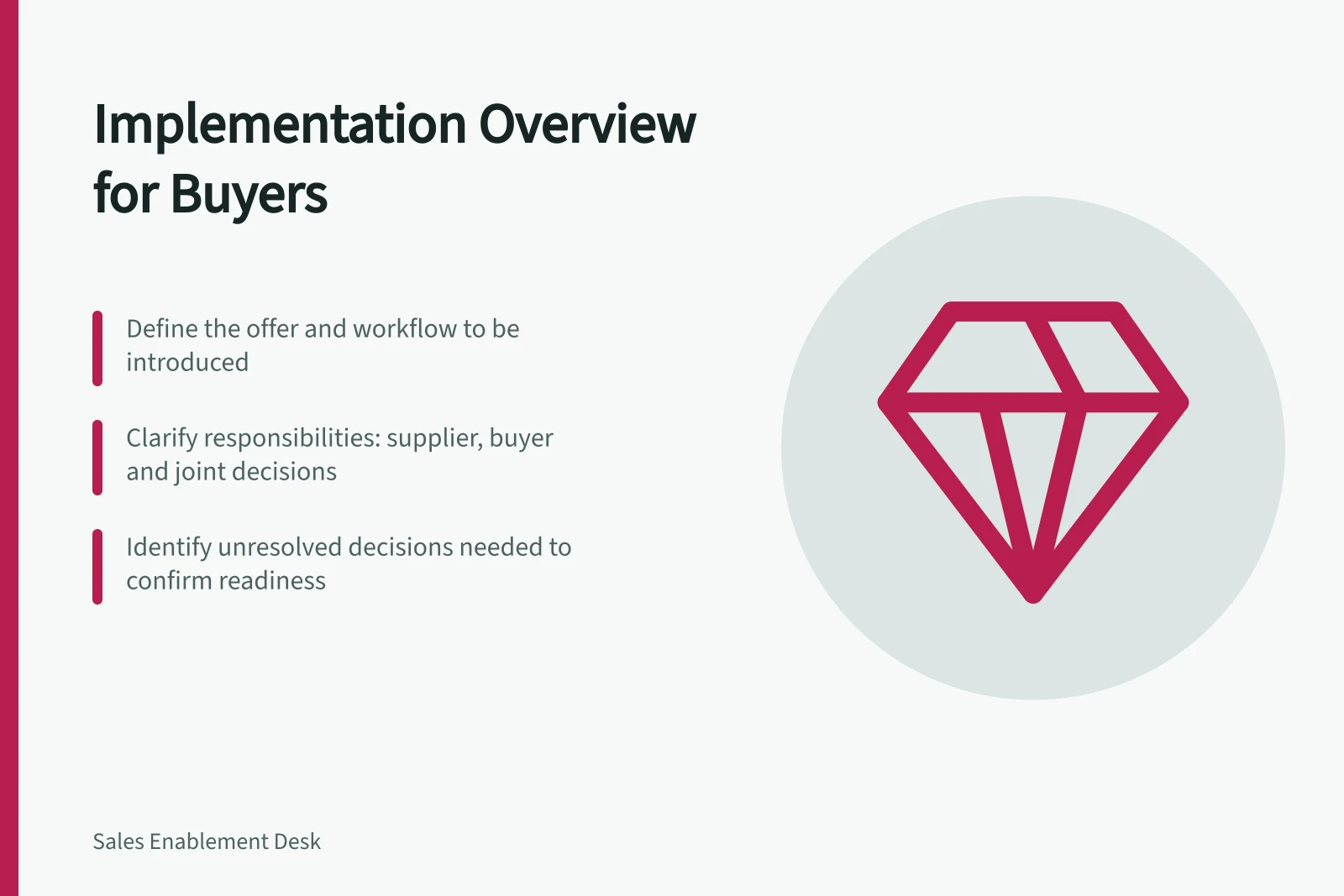
Name the offer and workflow the buyer wants to introduce. State the assumptions about scope, systems, decision makers and information still needed. If a detail is unknown, make it a question: a generic process should not read like an approved plan for this buyer.
Put the decision near the top: can the buyer and supplier resource the work and resolve its dependencies before proceeding? That question determines which details belong in the overview.
Show the work and responsibilities
Use a short sequence that reflects the supplier's verified delivery process. The following is a drafting framework; actual steps and owners need confirmation for the offer.
| Part of the proposed work | What the overview should clarify |
|---|---|
| Scope confirmation | What will be agreed, who approves it and what is outside scope. |
| Preparation | Which access, information and decisions each side must provide. |
| Configuration and review | What is set up, checked and resolved if an exception appears. |
| Acceptance and hand-over | What evidence is reviewed, who accepts it and what support follows. |
For each part, distinguish supplier work, buyer work and joint decisions. Do not say the supplier handles everything if the buyer must provide access, prepare data or approve a result. Where ownership is not yet agreed, say so.
Key Steps in Creating an Implementation Overview for a Buyer
- Scope ConfirmationDefine what is included and excluded, identify approval owners, and clarify boundaries.
- PreparationIdentify required access, data, decisions, and responsibilities for buyer and supplier.
- Configuration and ReviewOutline setup activities, review checkpoints, and resolution paths for exceptions.
- Acceptance and Hand-overSpecify evidence to be reviewed, acceptance criteria, and post-implementation support.
Separate an indicative path from a commitment
A timetable needs a starting point and known dependencies. Explain what must be assessed before a date can be committed, who will assess effort and how a change in scope would be handled. Another customer's duration is not a guaranteed schedule for this one.
The Australian Competition and Consumer Commission says it can require businesses to back up claims they make about their products or services and may investigate misleading conduct. Keep an indicative sequence distinct from an approved delivery date. If a date cannot yet be substantiated, tell the buyer what assessment will provide an answer.
Define what “ready” would mean for the proposed scope: for example, an agreed workflow check, documented exceptions and a named acceptance decision. These are possible criteria, not a universal standard. A demonstration or sample setup does not prove that the buyer's live systems, data and permissions will work.
Key Considerations for Indicative Implementation Planning
- Australian Consumer Law ComplianceBusinesses must substantiate claims about implementation timelines; misleading conduct may lead to investigation by the ACCC.
- No Guaranteed SchedulesAn implementation timeline for one customer cannot be assumed to apply to another without assessment of dependencies.
- Definition of ReadinessMay include agreed workflow checks, documented exceptions, and a named decision-maker for acceptance.
Identify the decisions still needed
Close with questions that can turn the overview into a buyer-specific plan. Which system owner can confirm access? Which workflow exceptions matter? Who approves the final scope? What evidence will the buyer need for acceptance?
Have the delivery owner verify the process and responsibilities before sharing. Review sentences that could be read as firm commitments against the approved position, and keep conditions beside the statements they limit. Revise the overview when the proposed scope changes.