Content Libraries
Part of Buyer-facing sales materials
Writing a useful product comparison without misleading claims
Choose buyer-relevant criteria, compare defined offers fairly and keep unknowns and qualifications visible.
A buyer-facing product comparison should show how each option meets the buyer’s requirements under comparable conditions. Choose the criteria first, verify each entry and leave an unknown visibly unknown. The buyer should see both a meaningful difference and what remains unchecked.
Define the options and criteria
Identify the products, editions or proposed configurations the buyer is considering. You can compare a base offer with a premium edition if the scope difference is clear. Record the market, version and date for each entry where these affect availability or terms.
Select criteria that could change the purchase decision: a required workflow, integration method, implementation responsibility or support arrangement. Define each criterion so every option answers the same question. “Has reporting” is vague; “Can the proposed setup produce the required report with these fields?” identifies a check.
Record for each criterion / Purpose
- Buyer requirement
- Keeps the row tied to a decision.
- Exact offer or configuration
- Prevents attribution to the wrong package.
- Evidence and date checked
- Shows the basis and currency of the entry.
- Condition or unresolved point
- Keeps a conditional capability from reading as universal.
State only what has been established
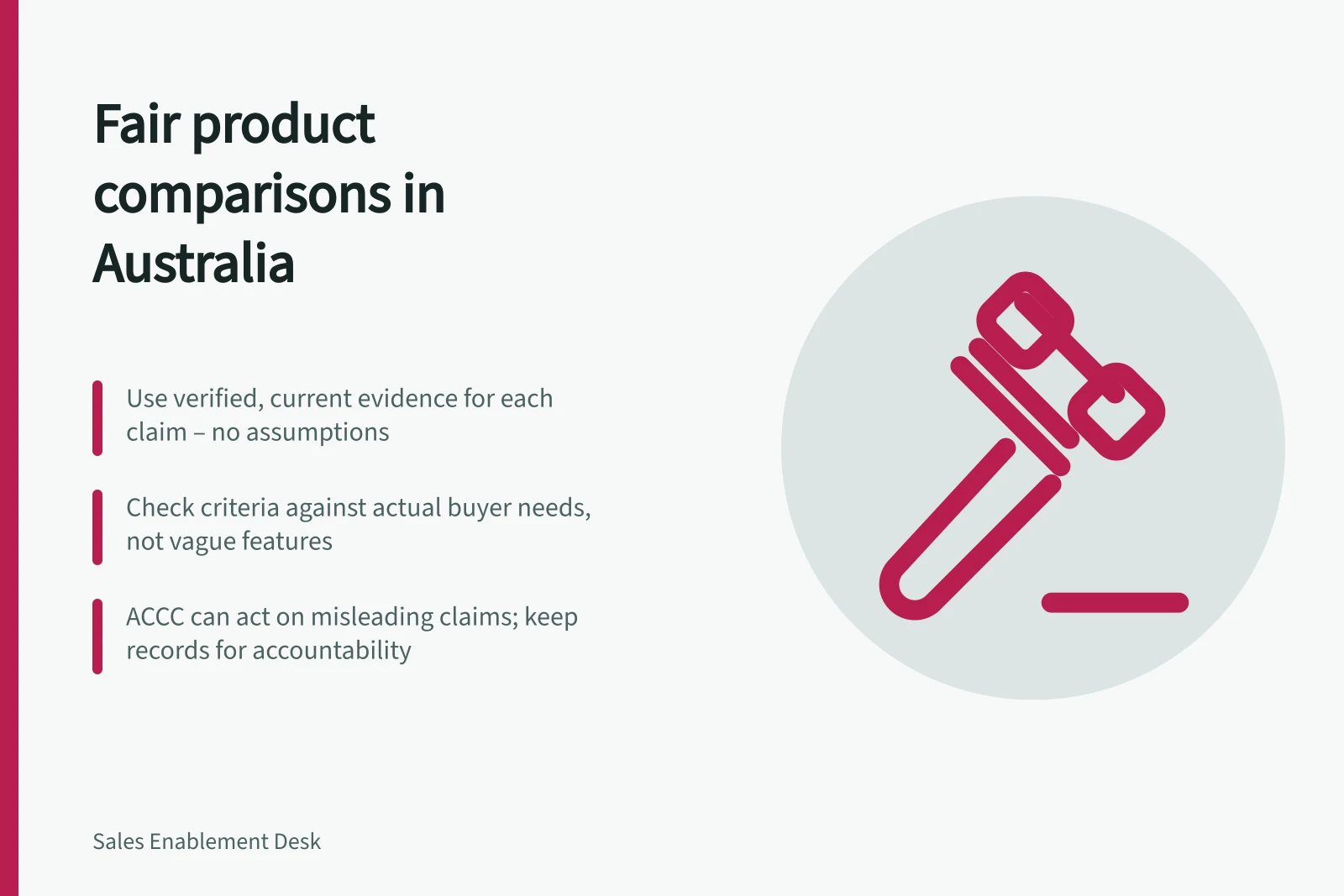
Use current product documentation and an authorised answer for your own offer. If a requirement depends on the buyer’s environment, distinguish a documented general capability from buyer-specific fit. A demonstration with sample data does not establish that the buyer’s integration works.
Do not infer a competitor lacks a feature because its public material is silent. “Not confirmed from the material reviewed” differs from “not available”. If the answer matters to the purchase, seek a documented response or mark the comparison incomplete.
The Australian Competition and Consumer Commission accepts reports about possible misleading or false claims and can require businesses to substantiate claims about their products or services. Keep evidence for each claim in the comparison and recheck that the overall message reflects what has been established.
Explain the trade-off and next check
A useful summary identifies what a verified difference means for the buyer’s priority. If an option meets a requirement only under a stated condition, explain that condition. If another entry is unconfirmed, say what evidence would settle it. Do not declare a winner from an incomplete table.
Before sharing, have the responsible owners check your own claims and another reviewer inspect the comparison for uneven wording. Recheck any price, availability or performance entry against current evidence.
Keep each material condition beside the entry it limits. End with the unanswered purchase questions and who will seek the answers. Update the comparison when an option, requirement or supporting record changes.