Content Libraries
Sales content usage analytics
Define sales content events, choose fair denominators and connect usage reports to buyer questions without treating opens or shares as proof of impact.
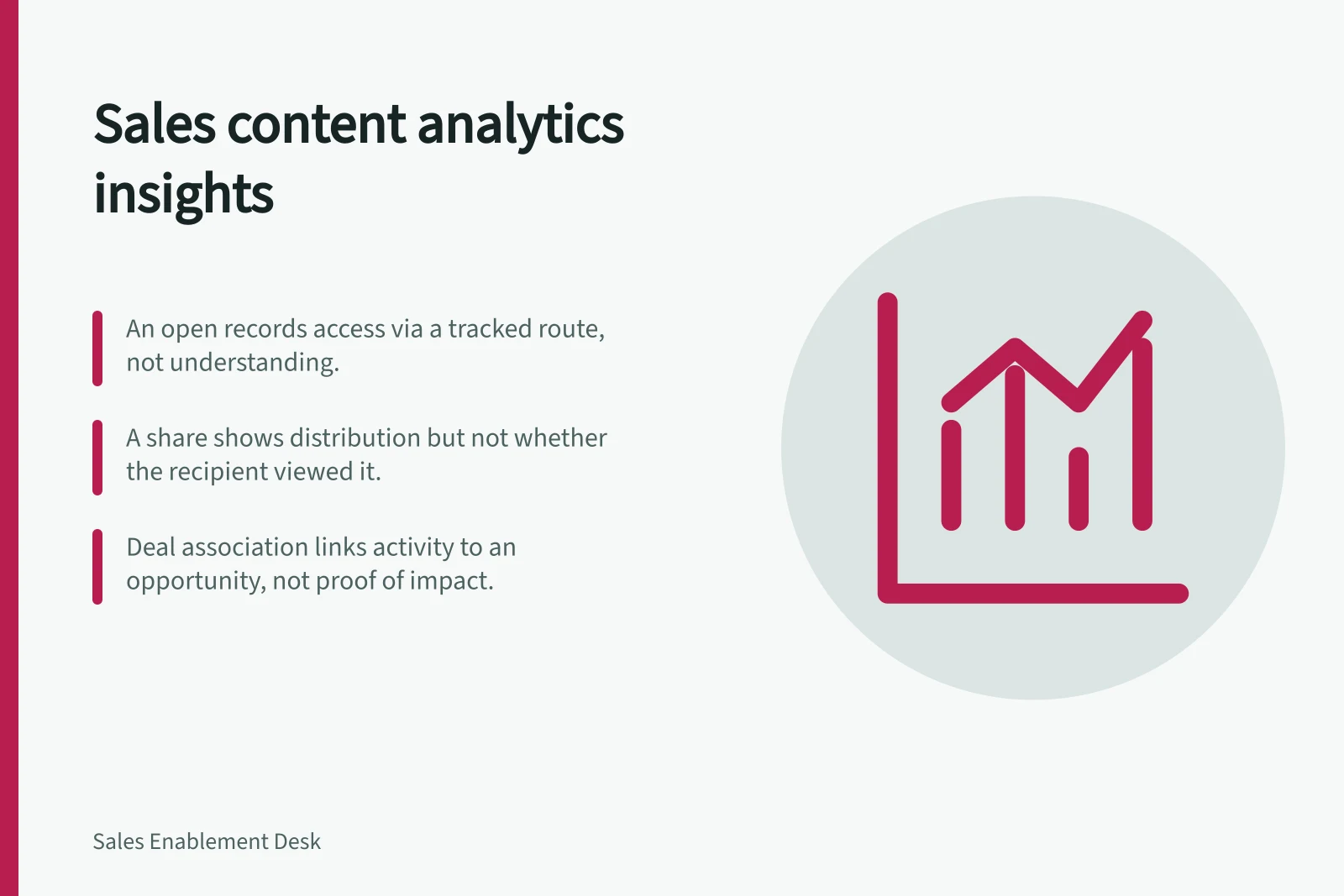
Sales content usage analytics helps a team decide which assets are found, shared and used to answer buyer questions. Start with the action each metric records. An open shows access; a share shows distribution. Neither shows that a buyer understood the material or that it changed a deal.
Begin with a decision
Choose a question the team can act on. For example: “Are representatives using the approved implementation overview when buyers ask about delivery responsibilities?” Define the relevant asset, the buyer situations in which it could help, and the action that might follow the review.
Low use might point to poor labelling, limited access or an asset that is no longer needed. Frequent sharing alongside recurring buyer confusion might call for a clearer answer. An apparent gap in activity data needs investigation before it supports a content decision.
Key Metrics for Evaluating Sales Content Usage in Australia
- Open Rate
- Indicates access via tracked routes
- Share Frequency
- Measures distribution across teams and deals
- Buyer View Count
- Tracks actual engagement by prospects
- Download Rate
- Shows content being saved or shared externally
- Deal Association Rate
- Links content use to opportunities
Know what the events mean
| Signal | What it records | What remains unknown |
|---|---|---|
| Seller open | Access to an asset through a tracked route | Whether the correct version was used with a buyer |
| Share | Distribution through a tracked route | Whether a recipient inspected it |
| Buyer view | A recorded viewing event | Whether the buyer understood it |
| Download | A recorded copy taken | What happened after the copy left the tracked route |
| Deal association | An activity linked to an opportunity | Whether the asset contributed to the outcome |
Read the platform’s definitions before combining figures. Event definitions and report limits can vary by platform, so verify them in the relevant documentation.
Choose the eligible population
A raw count favours assets with more chances to be used. Define the cases in which the asset would have been relevant. Distinguish “no suitable opportunity”, “no approved asset” and “asset available but unused”. Record the period, asset version, team and tracked sharing route. Keep cases with missing activity or opportunity links visible; do not treat them as non-use.
Separate prospecting contexts
Define whether the cases come from inbound or outbound prospecting. Inbound prospecting can start with a list supplied by marketing. Outbound prospecting involves sales teams selecting targets, including businesses or people who have not expressed interest. Keep those routes identifiable when setting the eligible population, so a use pattern is read against the buyer context it represents.
Connect use to the buyer’s question
Where access rules permit, inspect a few suitable cases alongside the event data. What did the buyer ask? Which passage was relevant? Did the follow-up answer the question or identify a check still needed? The case review can explain a pattern in the report, but its findings apply to the cases examined.
Deal progression provides context, not proof of content impact. An activity linked to an opportunity does not establish that the asset caused a win.
Act within the report’s limits
Treat report coverage and missing records as limits on the conclusion; detailed missing-data auditing is outside this overview.
Then make a specific decision: clarify a confusing asset, improve access to a useful one or retire a file whose purpose has ended. Review comparable cases after the change. Describe recorded use, observed buyer response and business outcomes as separate findings.
Sales data also supports inbound marketing: Performance, Content and Campaign Marketers use it to research, optimise and dissect their initiatives. If a content-use review is intended to inform one of those initiatives, record that purpose alongside the sales decision being considered.
In this guide
- Separating asset opens from useful sales impactUse an evidence ladder to distinguish sales asset opens, shares, buyer responses and deal outcomes without claiming that activity proves impact.
- Comparing content use across deal stagesAssign content events to the stage at use, choose eligible denominators and avoid reading today’s CRM stage into earlier sales activity.
- Identifying assets that are shared but misunderstoodFind repeated buyer misinterpretations of widely shared sales assets and decide whether wording, introduction or asset choice needs correction.
- Reviewing missing data in content engagement reportsTrace missing content events through sharing, collection, processing, CRM links and report filters before drawing conclusions from blank engagement data.