
Content Libraries
Part of Product launches for sales teams
Updating sales materials before external promotion
Inventory launch materials, reconcile product claims and withdraw outdated versions before external promotion.
Before promoting a new product, check any material likely to repeat its launch claims.
Each should describe the released offer, show conditions that change the answer and point to an approved next step for unresolved questions.
Approving a new product page does not correct an older slide or proposal snippet that sales can still send.
Inventory the launch materials
Start with the promotion plan and the conversations it will create. List the announcement, landing page, offer overview, product sheet, sales deck, proposal text, email template, demonstration notes and relevant support explanation where they are used. Include partner material if partners will promote the offer. A launch may need only some of these formats.
For each item, record its audience, owner, location, current version and material claims. Prioritise statements about availability, inclusions, exclusions, terms, implementation responsibilities, results and future dates. A recent file date does not establish that reused wording has been reviewed.
Reconcile the claims before release
Read the materials together. Does an announcement imply a broad capability while a product sheet limits it to one configuration? Does a deck say ‘available now’ when ordering still requires approval?
Does a screenshot show the release described by its caption? Ask the responsible product or commercial owner to settle conflicts.
| Review finding | Release action |
|---|---|
| Current, evidenced and approved for this use | Make the approved version available. |
| Accurate only with a condition | Place the condition with the claim and seek approval. |
| Unverified or inconsistent | Hold the affected claim and route the question to its owner. |
| Superseded | Withdraw it from sales use and identify circulating copies. |
For promotion in Australia, the ACCC can require businesses to back up claims they make about their products or services, and it can investigate misleading conduct. A qualification in a separate document may still leave the material the buyer sees with an overbroad message.
Key Compliance and Quality Metrics for Australian Sales Promotions
- ACCC Investigation Authority
- Yes – businesses must substantiate claims
- Common Claim Issues Found
- Overbroad promises without qualifying conditions
- Risk of Using Outdated Material
- Misleading customers even if condition is documented elsewhere
Release the right versions
Ask a colleague who did not edit the materials to prepare a fictional buyer follow-up using the approved location. Check whether they find the current version and notice its limit. If an older copy is easier to find, correct its distribution route as well as the master file. This is a suggested editorial check, not a claim that any materials have been tested.
Give representatives a short change note stating what changed, which version replaces the old one, when it applies and who can answer exceptions. If promotion must start while a claim is unverified, use approved narrower wording or hold that claim. The launch date does not authorise an unsupported promise.
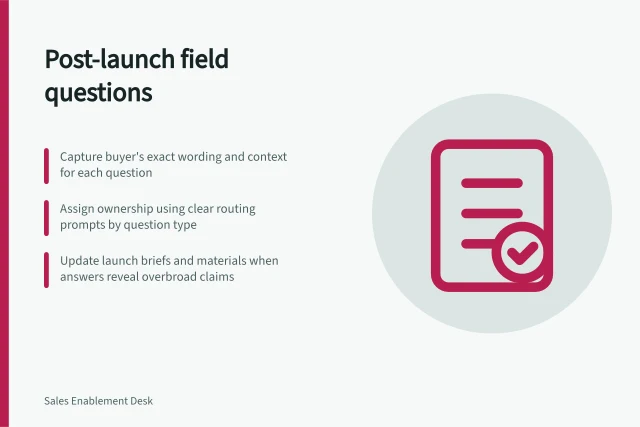
After release, route contradictions to the affected asset owners. Correct the approved source and reused copies, and arrange account-specific follow-up if a buyer received an inaccurate statement.