Content Libraries
Part of Objection handling resources
Recording accurate answers to repeated buyer concerns
Create owned answer records with evidence, conditions and review dates so repeated buyer concerns receive accurate responses.
Record a repeated buyer concern as a question with an owned, evidence-backed answer rather than a reusable line meant to end the conversation. Representatives need to know what they may say, when it applies and what to check for a particular buyer.
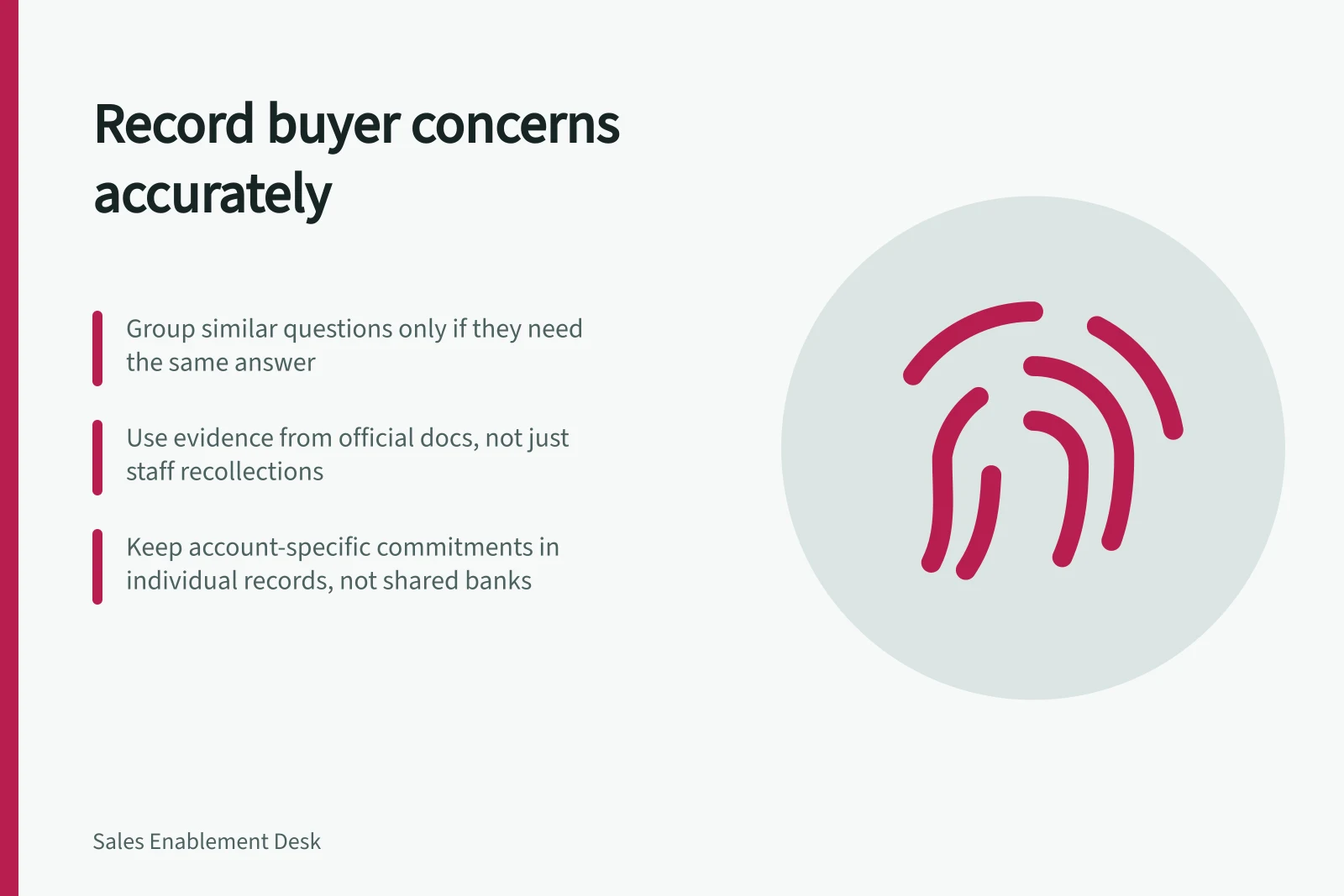
Begin with the actual question heard in the field. Group close variants only when they require the same answer. ‘Can we export records?’ and ‘Can we export every field in our current report?’ may sound similar but need different verification. Keep both if the distinction changes the buyer’s decision.
Use a record that shows its limits
A compact answer record can contain:
| Field | What to capture |
|---|---|
| Buyer question | The wording or decision behind the concern. |
| Approved answer | Plain language a representative can adapt without changing its meaning. |
| Applies when | Product, plan, configuration, region or contract conditions that affect the answer. |
| Evidence | The current document, approved term or test result that supports the claim. |
| Unknowns | What must be checked before answering a specific buyer. |
| Owner and review date | Who can confirm or change the answer, and when it was last checked. |
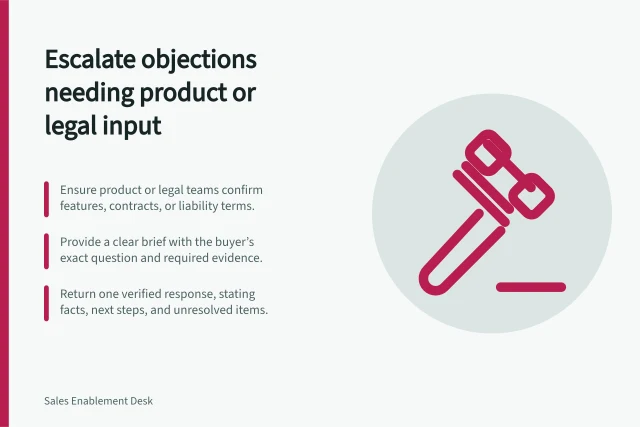
The evidence field should point to something the organisation can inspect. A colleague’s recollection may explain why a question arose, but it is a poor basis for a broad capability claim. If evidence is incomplete, the record should contain a safe interim response and an escalation route.
For example, an approved note might say: ‘A standard export is documented. Ask which records and fields the buyer needs; confirm any additional scope with the product team.’ That wording does not imply that every reporting requirement is supported. It also gives the representative a useful next question.
Separate the standard answer from an account decision
Some answers are general; others depend on a negotiated term, a configuration assessment or a specialist’s decision. Keep account-specific commitments in the account record with the responsible owner. Do not copy them into a shared answer bank as if they apply to everyone.
When a buyer’s concern repeats, review whether the answer still addresses the question. A spike in follow-up questions can mean that the wording is unclear, the evidence is hard to find or the product has changed. Correct the record at its source and mark superseded wording so it is not retrieved during a later meeting.
Before approving a revision, read the answer as a buyer would. Does the opening sentence create a broader impression than its qualifications support? Are the conditions close enough to the claim to be understood?
The ACCC says it can require businesses to back up claims about their products or services and may investigate if a business misleads. For an answer bank, keep claims tied to evidence and make qualifications clear in the representative’s working language.
Finally, test retrieval with a real field question. If a representative cannot find the approved answer quickly, another version will circulate. Keep the record short enough to use during preparation, while preserving the details needed to answer accurately.